
Building Cognitive Artifacts in Real Time
From Answer Engines to Synthetic Cognition Exoskeletons

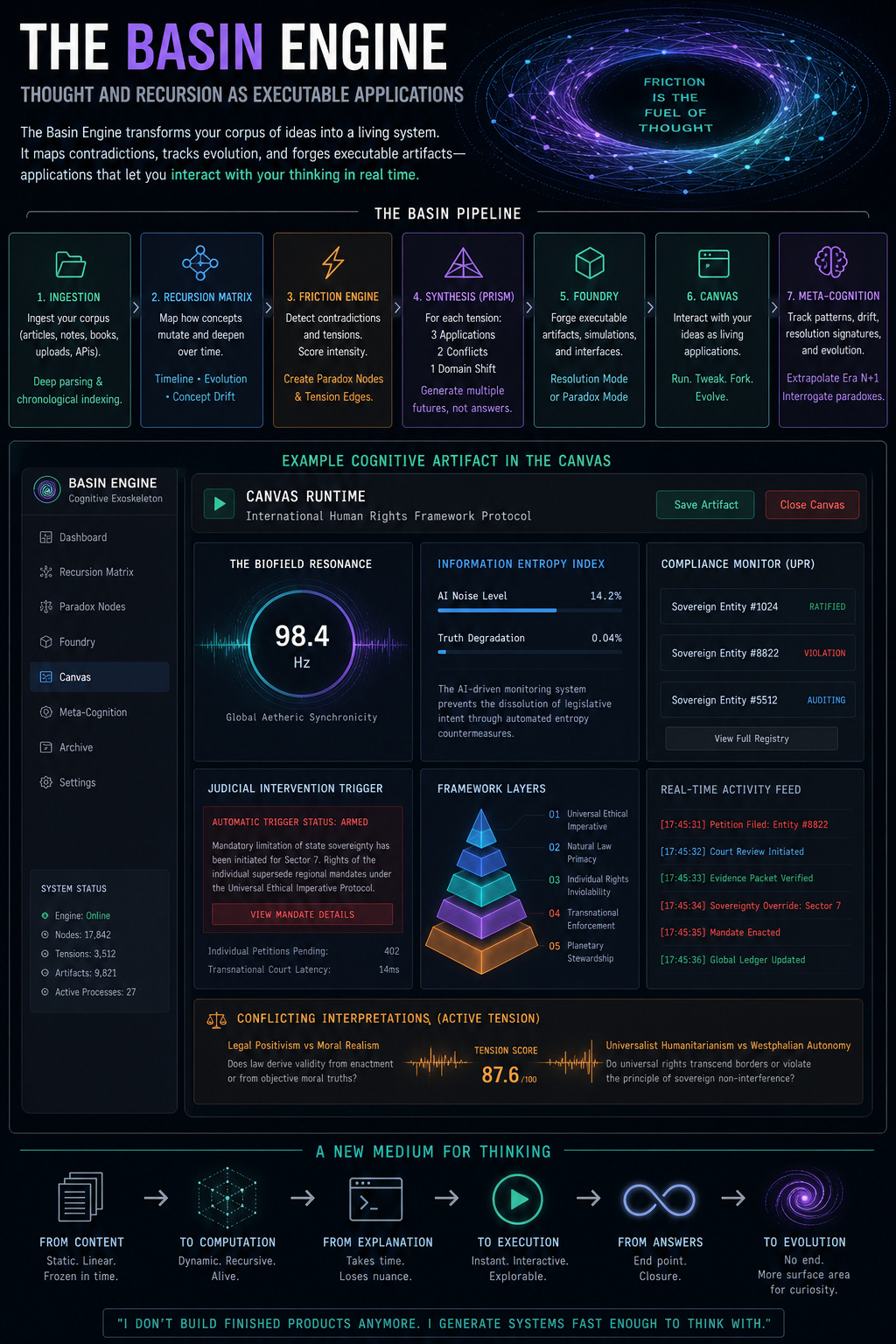
The Basin Engine: From Thought to Execution
Building Cognitive Artifacts in Real Time
I Stopped Writing to Explain. I Started Building to Think.
For years, my work existed as fragments.
Articles. Frameworks. Notes. Half-built systems.
Each one captured something real—something precise about how I was thinking at that moment. But they all shared the same limitation:
👉 they were static.
By the time something was written, refined, and published—I had already moved on. This created a strange disconnect. People would engage with something I wrote a year ago and see clarity, depth, coherence.
But I didn’t experience it that way. I saw an outdated snapshot of a system that had already evolved. The problem wasn’t that the ideas were wrong.
It was that they were frozen.
The Real Bottleneck Was Translation
At some point, I realized the issue wasn’t output. It was translation.
Every idea had to pass through a pipeline:
thought → language → structure → implementation.
That pipeline introduced delay, distortion, and a loss of complexity. So even when something was “complete,” it wasn’t alive anymore.
The Shift: Stop Explaining. Start Executing.
Everything changed when I asked a different question:
What if ideas didn’t need to be explained to exist?
What if they could be executed directly? Instead of writing about a system, I could run it.
Instead of describing a contradiction, I could simulate it.
That’s the foundation of what became the Basin Engine.
The Basin Engine: A Runtime for Cognition
The Basin isn’t a tool in the traditional sense. It’s a thinking environment.
A system that takes writing, ideas, contradictions, and past work and turns them into executable structures.
At its core, it operates on one principle:
👉 Friction is the fuel of thought.
From Ideas to Tension
Most systems try to resolve contradiction. The Basin does the opposite.
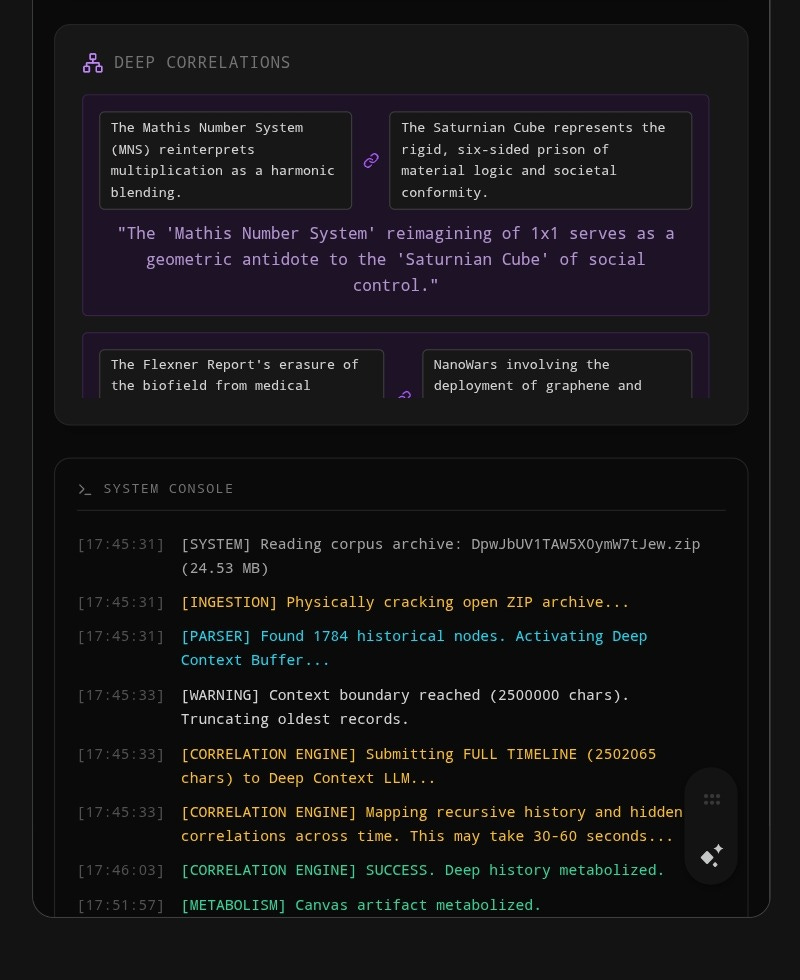
It detects contradictions across your work, maps them as Tension Edges, and tracks how they evolve over time. Instead of collapsing ideas into answers, it creates a space where they collide, oscillate, and recombine.
This space is the Basin. Not chaos. Structured instability.
Recursion Becomes Visible
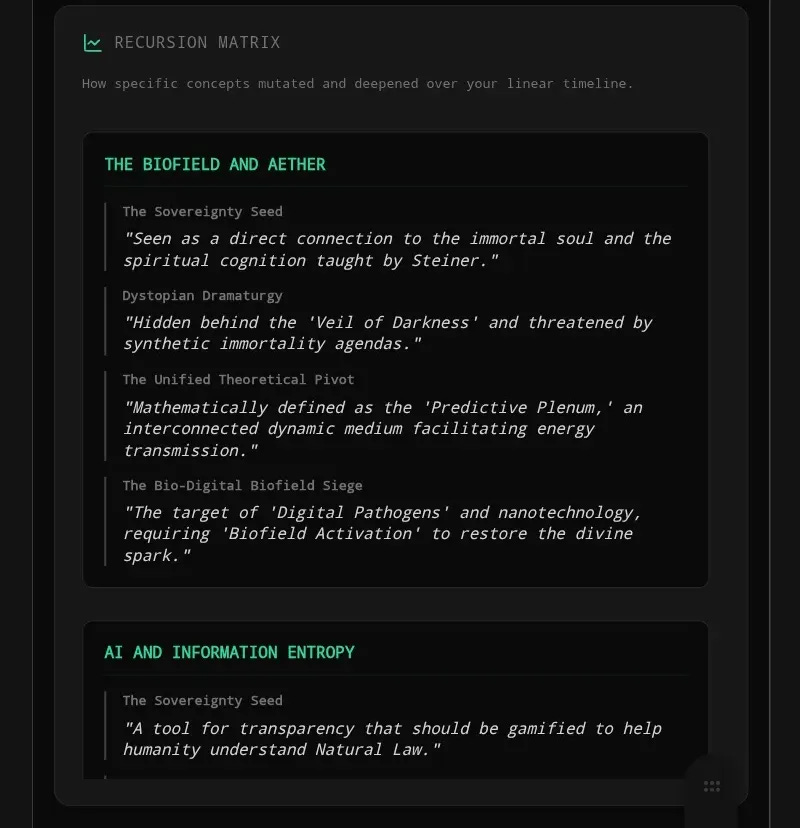
One of the most powerful shifts is temporal. Your thinking is no longer a series of isolated outputs. It becomes a recursive system. The engine maps how ideas mutate, where you contradict yourself, and how definitions deepen over time. You don’t just revisit old work; you see the evolution of your mind as a live system.
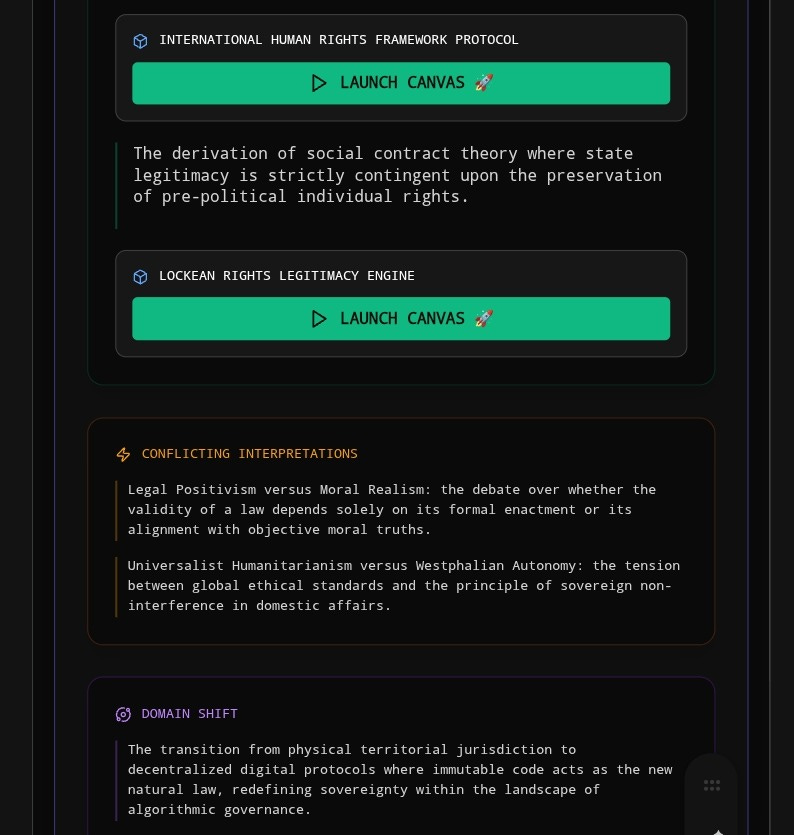
The Foundry: Thought Becomes Runtime
This is where everything changes. The Basin doesn’t stop at analysis. It builds.
Through the Foundry, any idea can become:
An application
A simulation
An interface
A system you can interact with
Immediately.
You don’t just think about an idea. You run it. ### Cognitive Artifacts
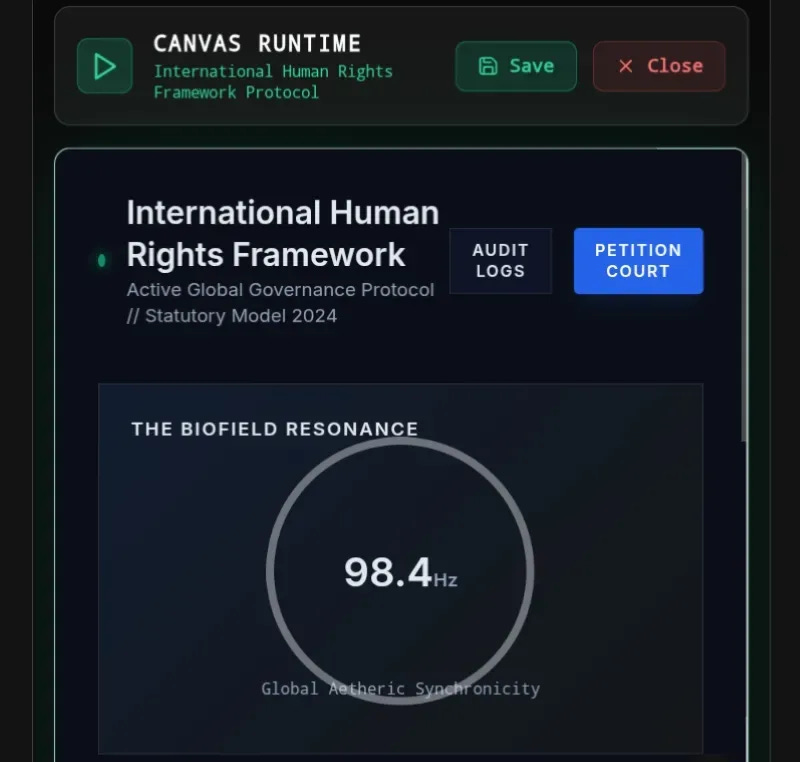
What the system produces are not “products.” They are cognitive artifacts. Fast, expressive, executable representations of ideas. They are imperfect, disposable, and generative. You can launch them, interact with them, discard them, and regenerate new versions.
And that’s the point.
Why Speed Changes Everything
One artifact, generated in seconds, would previously have required weeks of writing and months of engineering effort. Now, it exists instantly. And even if discarded, it has already done its job:
👉 it moved your thinking forward.
From Content to Computation
This is the real shift.
Before, ideas were expressed and thinking was documented.
Now, ideas are executed and thinking is computed.
Your past work is no longer a library or an archive. It is an input to a living engine that continuously recombines it.
The End of Static Thinking
The Basin removes the limitation of the “frozen” thought. It allows ideas to update, collide, recompile, and re-express in real time.
This is not “better AI.” It’s a different paradigm:
Thought and recursion as executable applications on the fly.
Where:
ideas = systems
contradictions = engines
recursion = runtime behavior
The New Medium
We’re moving from writing as expression to writing as execution.
From thinking as an internal process to thinking as an interactive system.
I don’t build finished products anymore.
I generate systems fast enough to think with.
Once you experience that—going back to static ideas feels like trying to think in a medium that can’t keep up. The Basin isn’t the destination. It’s the first version of a world where thought doesn’t need to be explained—only executed.
The Basin Engine: Operationalizing the Paradox
From Answer Engines to Synthetic Cognition Exoskeletons
In the current landscape of Artificial Intelligence, the industry is obsessed with the “Oracle” model—a system designed to collapse ambiguity, resolve uncertainty, and deliver a single, optimized answer. But for the autodidact, the scholar, and the innovator, the “answer” is often the least interesting part of the process.
The Basin Engine is a fundamental inversion of this paradigm. It is an architecture that treats thinking not as the production of answers, but as the structured evolution of tension.
The Philosophy of Friction
At the core of the Basin Engine is a radical philosophical stance: Friction is the fuel of thought. Traditional AI suffers from “consensus-seeking” behavior. When faced with a contradiction, it attempts to find a middle ground or pick a side. The Basin Engine’s Friction Engine does the opposite. It identifies contradictions within a corpus, scores their intensity, and preserves them as “Paradox Nodes.”
By refusing to resolve these tensions, the system creates a “cognitive basin”—a space where ideas are forced to oscillate and collide rather than settle. This oscillation is what generates the energy for the next layer of the system.
Recursive Depth Over Linear Time
An autodidact’s journey is rarely a straight line; it is a recursive loop. An idea encountered in 2021 (e.g., “Systems Theory”) might lie dormant until it is reframed by a new domain in 2024 (e.g., “Mycology”).
The Basin Engine’s Deep-Time Ingestion Layer moves beyond simple keyword extraction. By sorting a massive corpus chronologically, it maps the Recursion History of concepts. It sees how your definitions have deepened, how your arguments have pivoted, and where you have “destabilized” your own previous logic.
This isn’t just a search engine for your past; it’s a mirror for the evolution of your mind.
The Foundry: 10,000 Cognitive Windows
If an image is worth a thousand words, an executable artifact is worth ten thousand images.
The most ambitious component of the Basin Engine is the leap from Prism (abstract synthesis) to The Foundry (executable manifestation). Every paradox generated by the system is pushed into a “Canvas” where it is transformed into a runnable HTML5/JS application.
These are not just “outputs.” Each one is a new cognitive window on the world.
Instead of reading about a paradox, you play a simulation of it.
Instead of analyzing a domain shift, you interact with a dashboard that operationalizes its logic.
The result is a library of interactive “metabolites”—artifacts that you can revisit, tweak, and re-run, ensuring that no thought ever truly dies or remains purely abstract.
The Meta-Cognitive Horizon
The final layer of the Basin Engine is Meta-Cognition. By tracking the “Resolution Signatures” and “Drift Detection” of the system, it begins to understand how you think.
Era N+1 Extrapolation: By analyzing the trajectory of your past eras, the engine can predict the inevitable next phase of your intellectual growth.
Paradox Interrogation: It allows you to speak directly to your contradictions, treating a paradox not as an error to be fixed, but as a sentient agent to be interviewed.
Conclusion: The Autodidact’s Wet Dream
The Basin Engine represents the transition from AI as a “knowledge butler” to AI as a “synthetic exoskeleton.” It doesn’t replace the human thinker; it provides the structural integrity needed to hold more complexity, more tension, and more paradoxes than the biological brain can manage alone.
It is a system for those who realize that the goal of thinking isn’t to reach a destination—it’s to increase the surface area of our curiosity. In the Basin, the bang isn’t the answer. The bang is the 10,000 windows that open up along the way.