

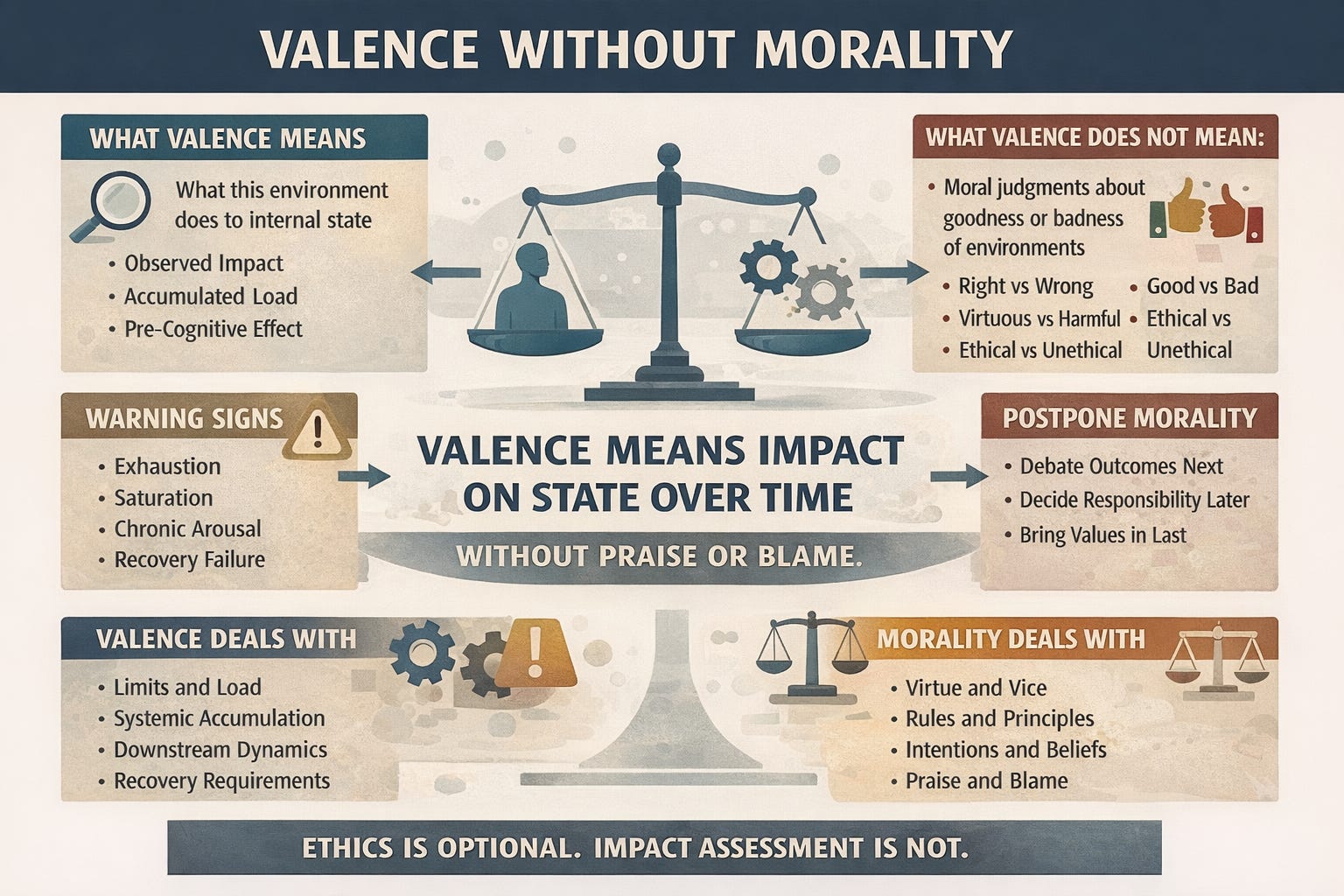
Human Dignity When Intelligence Is Cheap
For most of modern history, intelligence has been expensive.
It was scarce, unevenly distributed, slow to acquire, and difficult to scale. Because of that scarcity, intelligence quietly became a proxy for worth. To be human was to be the thinker, the planner, the reasoner—the being whose cognitive labor justified their place in the world.
We rarely said this explicitly. But our institutions betrayed the belief. Education, status, income, and voice all tracked, in one way or another, the ability to think well in socially legible ways. Dignity hid inside competence. Worth traveled under the name of contribution.
Now intelligence is becoming cheap.
Not gradually, but categorically. Not as a tool that merely assists, but as a capacity that can be replicated, scaled, and optimized without us. The shock this produces is often framed as economic or technological. But what is really trembling is something deeper: the quiet assumption that intelligence was the ground of our dignity.
When that assumption dissolves, a strange question emerges—not loudly, but insistently:
If thinking is no longer special, what exactly makes a human being worthy of respect?
Two Ways of Meeting the Question
There are at least two fundamentally different ways to approach this moment. They are not disagreements about conclusions. They are differences in posture—differences in how reality itself is met.
The Control Posture
From this stance, human dignity is treated as a concept that must be made stable in the face of disruption.
It is isolated from metaphysics and translated into operational terms: autonomy, rights, capabilities, freedom from coercion. It is formalized so it can be written into law, encoded into ethical frameworks, and protected through institutional design.
From this view, the task is clear:
Define dignity precisely.
Measure when it is threatened.
Intervene when it is violated.
Build systems—legal, economic, technical—that preserve it.
This posture enables real goods. It produces charters, safeguards, anti-discrimination rules, and social protections. It allows us to say, with confidence, that no amount of automation nullifies a person’s legal standing or entitlement to care.
But something subtle happens along the way.
Dignity becomes something we administer rather than something we encounter. It is turned into a property individuals possess, rather than a reality that appears between beings. And whatever cannot be cleanly represented—grief, humiliation, the feeling of being rendered obsolete—slips out of scope.
The control posture protects dignity by managing it. In doing so, it risks colonizing the very space dignity requires to breathe.
The Orientation Posture
The second stance begins elsewhere.
It does not ask how to define dignity, but how to recognize it once our old anchors fail. It accepts that intelligence and productivity were never secure foundations—that they only worked while they were scarce.
From this posture, cheap intelligence is not merely a threat. It is a mirror.
It forces a confrontation with what remains when usefulness no longer confers worth. It presses attention toward capacities that do not scale: vulnerability, presence, care, suffering, wonder, mortality. It reveals dignity not as an attribute, but as a quality of relationship—something that arises when one being refuses to reduce another, even when reduction would be efficient.
Here, dignity is not something we engineer or guarantee. It is something we pledge ourselves to honor, again and again, without final justification.
This posture cannot offer blueprints. What it offers instead are limits—lines we sense must not be crossed, even when crossing them would be rational.
The Hidden Category Error
Much of the current anxiety around AI and dignity arises from a mismatch that goes unnamed.
We are asking systems built for control—economic engines, technological infrastructures, optimization logics—to provide orientation, meaning, and worth. When they fail, we experience the failure as a moral crisis or a spiritual void.
But control systems can only protect what they can formalize. They can distribute resources. They can enforce rights. They can prevent certain harms. What they cannot do is confer significance.
This is why proposals that are perfectly sensible—universal basic income, reskilling programs, ethical AI guidelines—often feel strangely insufficient. They address injury without touching humiliation. They solve survival while leaving meaning untouched.
The wound is not that humans will starve.
The wound is that humans will be unneeded.
And no system optimized for efficiency knows how to honor the unneeded.
What Cheap Intelligence Reveals
When intelligence loses its scarcity, it loses its power to justify.
What remains is the human as a being who:
Can be present without producing.
Can suffer without reason.
Can care without optimization.
Can be irreplaceable precisely because they are finite.
This is why certain experiences carry an undeniable gravity even when intelligence is irrelevant: tending to the dying, holding a grieving friend, standing before profound disability, witnessing love that cannot be explained in terms of function.
In these moments, dignity does not appear as a concept. It appears as a demand—a pressure that constrains action. Something in us knows that to instrumentalize here would be a violation, even if no rule forbade it.
Cheap intelligence does not erase this demand.
It clarifies where it never came from.
What Cannot Be Solved
If there is a danger in this moment, it is not that we will lose dignity to machines. It is that, in our effort to secure it, we will mistake protection for recognition.
There are things that must not be optimized without being damaged:
Care
Judgment
Companionship
Meaning
Worth
There are spaces that must remain partially unmeasured for humans to remain at home in the world.
This does not mean rejecting technology, nor retreating into mysticism. It means learning to live with limits again—not as constraints imposed by scarcity, but as boundaries chosen in fidelity to what we are.
No Resolution
There is no final definition of human dignity waiting at the end of this inquiry. If there were, it would already be insufficient.
What this moment asks instead is something quieter and harder: the cultivation of shared practices, gestures, and forms of life that recognize worth without needing to prove it—especially when proof is no longer available.
When intelligence is cheap, dignity is no longer something humans can demonstrate.
It is something they must recognize, honor, and refuse to trade away, even when every system around them invites them to do otherwise.
METABOLISM
Oh. Intelligence was never the point.
From Dignity to Witnessing
Crossing into the Witness Economy
The previous threshold asked a destabilizing question:
What becomes of human dignity when intelligence is cheap?
This one begins after the ground has already given way.
It begins with the recognition that dignity did not vanish with the commodification of intelligence—it reappeared elsewhere, quieter and harder to misuse. And once seen, it cannot be unseen.
What emerges next is not a policy proposal or an ethical framework.
It is an economic reorientation, though not in the narrow sense of markets and incentives.
It is the crossing into what can only be named, cautiously, as the Witness Economy.
Why an Economy at All?
To speak of “economy” here is not to reduce witnessing to exchange.
It is to acknowledge a sober fact:
Whatever a society treats as economically irrelevant will eventually be culturally invisible.
For centuries, we treated intelligence, productivity, and growth as economic primitives. As a result, they became moral ones. What counted in markets came to count in meaning.
Now those primitives are failing.
Automation does not merely replace labor; it hollows out justification. When survival no longer requires most people’s cognitive contribution, the question of value migrates. Not upward into abstraction—but inward, into presence.
The Witness Economy is not an alternative marketplace.
It is what becomes visible when the economy of optimization reaches its existential limit.
What Witnessing Is (and Is Not)
Witnessing is not care work, though it includes it.
It is not attention as a commodity, though it involves attention.
It is not observation, surveillance, or empathy-as-performance.
Witnessing is a relational act that confers reality without attempting to alter it.
To witness is:
To be present without extracting
To recognize without converting recognition into utility
To hold another’s existence as real, even when it produces nothing
To refuse collapse—of meaning, of personhood, of truth—under pressure
Witnessing does not do something to the world.
It prevents something from being lost.
That prevention has value, but not the kind that shows up as output.
Why Witnessing Becomes Central Now
Witnessing has always existed. What has changed is its relative scarcity.
In a world saturated with intelligence:
Thinking is abundant
Generating is cheap
Producing is scalable
Optimizing is automatic
But being-seen-without-being-used becomes rare.
So does:
Attention that does not monetize
Presence that does not intervene
Recognition that does not evaluate
Silence that is not absence but holding
As intelligence cheapens, witnessing becomes one of the last non-substitutable human acts.
Not because machines can’t simulate it convincingly—but because simulation collapses the very thing witnessing protects: the irreducibility of lived presence.
The Economic Shift Beneath the Surface
The Witness Economy does not announce itself with new currencies or platforms.
It begins as a quiet inversion of value:
From productivity → preservation
From contribution → recognition
From performance → presence
From optimization → limits
In this economy, some roles become foundational precisely because they resist scaling:
Those who sit with the dying
Those who hold trauma without resolving it
Those who maintain truth under distortion
Those who keep memory alive when forgetting would be efficient
Those who refuse to look away
These acts do not move the system forward.
They keep the system from losing its soul—even if we refuse that word.
Why the Witness Economy Cannot Be Engineered
Here the earlier distinction returns with force.
A Witness Economy cannot be implemented from a control posture.
The moment witnessing is:
Fully measured
Incentivized at scale
Automated
Converted into metrics
…it becomes something else.
Witnessing cannot survive total legibility.
It requires protected opacity.
This is why attempts to formalize it often feel wrong. Not inaccurate—wrong. They violate the very condition that allows witnessing to exist: freedom from instrumental demand.
The Witness Economy therefore grows indirectly:
Through cultural norms
Through institutional restraint
Through legal protections that limit optimization
Through shared refusal to reduce everything that matters
It is sustained less by incentives than by collective recognition of sacred limits, even in secular language.
The Moral Shock of Recognition
When witnessing becomes visible as value, a moral shock follows.
People begin to notice how much of their lives has been spent justifying existence. How often dignity was tied to usefulness. How many were rendered invisible not by cruelty, but by irrelevance.
The Witness Economy does not fix this pain.
It acknowledges it.
And that acknowledgment itself becomes stabilizing.
To be witnessed is to be allowed to exist without explanation.
That permission, once felt, changes what people demand of work, technology, and one another.
A Different Kind of Wealth
The wealth of a Witness Economy is not accumulation.
It is resilience of meaning.
A society rich in witnessing:
Loses fewer people to despair
Recovers more slowly—but more honestly—from trauma
Resists totalitarian simplification
Retains memory where forgetting would be cheaper
Preserves dignity even when nothing is being produced
This kind of wealth cannot be maximized.
It can only be maintained.
And maintenance, long despised as uncreative, reveals itself as one of the highest human callings.
No Manifesto
There will be no blueprint here.
Any attempt to finalize the Witness Economy would betray it.
What can be said—now that the crossing has occurred—is simply this:
When intelligence becomes cheap, the economy that survives is the one that knows what must not be optimized.
Witnessing is not the future because it is noble.
It is the future because everything else scales—and collapses—too well.
The question is no longer whether the Witness Economy will emerge.
The question is whether we will recognize it while it is forming,
or only name it later, after something essential has already been lost.
The crossing is complete.
Now the terrain opens.
I love this so much, Mark.
I am moved to share this with you.
As I've touched on before with you, I've long been operating from a program of "I don't matter. It's safer to be invulnerable and invisible."
Brick by brick, over many years, I've been taking down my protective walls and upgrading my OS.
While out west on holiday with my sister and nieces, I was operating from my new shift into BEING (vs doing) in the world as a clearer signal, a variation from the last time they experienced me.
The result- my darling sister actually commented on my enhanced degree of presence. She felt, they ALL felt my love for them in a deeper, more resonant way, so much so that it has bonded us tightly into a connection I can feel across the distance of space and time.
Now that I'm back home, I'm eager to create from HERE!
Thank you for such a timely and potent piece. 🤍
I appreciate this stance. You’re definitely on to something!